
AD734SQ
Common Product Fields
Part NumberAD734SQ
ManufacturerAnalog Devices (ADI)
CategoryAll Featured Parts
DescriptionFour-Quadrant Analog Multiplier/Divider, 10 MHz Typical Bandwidth, 450 V/µs Typical Slew Rate, ±8 V to ±16.5 V Supplies, 14-Pin CERDIP, -55°C to +125°C
Supply Status● Available for RFQ
Datasheet
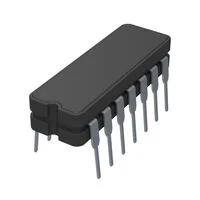
Package14-Lead Ceramic Dual In-Line Package (CERDIP / Q-14) / Through-Hole
RoHSCompliant
Stock Status● Contact for availability
 REQUEST QUOTE
Product Overview
The Analog Devices AD734SQ is an S-grade ceramic-package analog multiplier/divider from the AD734 family. It supports four-quadrant multiplication and direct two-quadrant division, with a low-impedance voltage output. Its configurable analog architecture supports multiplication, division, squaring, square-root circuits, modulation, demodulation, and voltage-controlled signal processing.
The X, Y, and Z interfaces are fully differential. In the standard multiplier feedback configuration, the output follows W = XY/U, where X and Y are the differential input voltages and the internal scaling voltage U is 10 V. This scaling voltage is derived from an integrated buried-Zener reference. The Z interface also supports feedback and the addition of a separate signal to the output in the appropriate configuration.
Typical full-power bandwidth is 10 MHz for a 20 V peak-to-peak output. The output amplifier provides a typical slew rate of 450 V/µs and a typical settling time of 200 ns to 0.1% for a 20 V output step. These dynamic specifications are given under the datasheet test conditions, including nominal ±15 V supplies and the stated load requirements.
For the S grade, total static multiplier error is typically 0.1% of full scale, with a maximum of 0.4% at +25°C. The maximum error over the full rated temperature range is 1.25% of full scale. Total static error includes scaling, offset, and nonlinearity contributions, providing a combined measure of multiplier accuracy.
Direct denominator control allows the internal 10 V scaling voltage to be replaced with an external denominator from 10 mV to 10 V, providing a 1000:1 control range. With the Y input fixed at 10 V, the documented divider configuration maintains approximately 10 MHz bandwidth at a gain of 10 and provides approximately 2 MHz bandwidth at a gain of 100. This capability supports wideband gain control and automatic gain-control circuits.
The differential input interfaces have a typical resistance of 50 kΩ, typical capacitance of 2 pF, and nominal bandwidth of 40 MHz. Their input bandwidth allows mixer and demodulator applications with input frequencies extending to approximately 40 MHz, provided the required output signal remains below 10 MHz. The datasheet also describes rms-to-dc conversion and other functions using external feedback circuitry.
The specified dual-supply operating range is ±8 V to ±16.5 V, with most performance specifications characterized at ±15 V. Typical quiescent current is 9 mA. Operation at reduced supply voltages requires correspondingly reduced signal levels, while the internal output amplifier provides the voltage-output interface for the selected analog function.
The S grade is specified for operation from -55°C to +125°C. The Q-14 option is a 14-lead ceramic dual in-line package for through-hole mounting. Its combination of differential inputs, internal scaling reference, direct denominator control, and wideband output supports precision analog computation and signal-conditioning equipment requiring an extended operating temperature range.
Request Quote / RFQ